

Thank you to everyone who joined us for November’s Special Symposium edition! Missed it? The recording is available here.
We would like to wish everyone a very happy holiday season and we send our wishes for a happy and healthy new year!

Date: January 23rd, 2026
Time: 14:00 UTC
Registration: Please register here.
Title: Connectivity-based parcellation to map brain organization
Speaker: Dr. Sarah Genon
Abstract: The human brain is often described in terms of discrete regions, yet defining brain atlases remains a central challenge in neuroscience. Connectivity-based parcellation offers a principled framework for identifying functionally coherent regions using a variety of connectivity markers. In this talk, Dr. Sarah Genon will highlight how metabolic connectivity can be leveraged to derive region definitions grounded in metabolic network organization. I will discuss the relevance of these connectivity-based regions for improving our understanding of brain–behavior relationships and characterizing dysfunction in clinical populations.

Dr. Sarah Genon is a cognitive neuroscientist specialized in neuroimaging, machine learning, and the study of brain–behavior relationships. She is a Heisenberg Professor at the Heinrich-Heine University of Dusseldorf and a group leader at the Forschungszentrum Jülich (Germany).
The MCOS promotes rigor in research and resource sharing. We aim to hold MCOS every third Friday of the month, subject to change due to speaker availability. Please stay tuned for MCOS updates and reminders on social media! Thank you!
📝 Functional PET for mapping metabolic dynamics in Parkinson’s disease
In this study, Heinecke and colleagues combined resting state functional 18F-FDG PET (fPET) and functional magnetic resonance imaging to evaluate differences between healthy controls and Parkinson’s disease (PD) patients in glucose consumption, establish a measure of glucose dynamics at the subject-level, and develop a seed-based network approach for analysing metabolic time series data.
Read the full study in Scientific Reports.
Key Findings:
📝 Fully Individualized Models for Cross-Sectional and Longitudinal Network-Based Tau Spread
[18F]Flortaucipir PET and diffusion magnetic resonance imaging were used to define individualized epicentres of tau pathology. Using data from the Alzheimer’s Disease Neuroimaging Initiative, Brown and colleagues showed that a model using individualised tau epicentres outperform models to assess tau covariance that are based on group epicentres and/or group connectomes.
Read the full study in Imaging Neuroscience.
Key Findings:
📝 Whole-Body [18F]FDG-PET/CT Imaging of Healthy Controls: Test/Retest Data for Systemic, Multi-Organ Analysis
The aim of the dataset was to develop a normative database for FDG-PET based on healthy controls, providing a reference for identifying voxel-level metabolic aberrations in cancer patients. This approach may uncover treatment-related changes beyond cancer diagnostics.
Read the related publication in Scientific Data.
Key Findings:
The dataset can be found in QUADRA_HC.
The MCWG Outreach Council invites you to submit announcements or information about papers, conferences, presentations or other events or news related to brain and molecular connectivity as well as any positions available or job opportunities that you wish to publicize and share with the community!
Please submit any material for consideration by the final day of each month using this form – thank you!
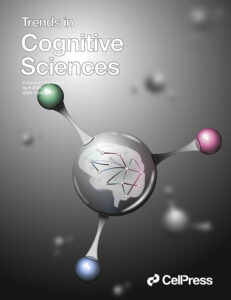
The MCWG is made up of four international and multidisciplinary councils dedicated to promoting molecular connectivity research via dissemination of methods, results, collaboration, and resource sharing (e.g. datasets, tools) within the scientific community. We encourage the neuroscientific community to take an integrative perspective in study of the brain connectome, where various methods including MRI-based techniques, electrophysiological tools, and molecular imaging advance our understanding of the brain. Please find fundamental questions outlined here: “Brain connectomics: time for a molecular imaging perspective?”
Our website can be found here. We also invite you to join the MCWG!