

Greetings from the MCWG! Wishing you a bright and restful summer!
MCWG members were present at the Brain and Brain PET 2025 conference in Seoul and at the Annual Meeting of the Organization for Human Brain Mapping (OHBM) 2025 conference in Brisbane.
We’ve put together some highlights and presentations showcasing recent advances in molecular connectivity.
We hope you enjoy it!

🧠 Symposium: Current advances in molecular connectivity
Tommaso Volpi, PhD


Sharna Jamadar, PhD


Kristina Herfert, PhD


📝 Featured Abstracts
Metabolic Connectivity From Dynamic [18F]FDG PET Reveals Task-Evoked Brain Network Architecture
Authors: Giulia Vallini, Murray Bruce Reed, Sebastian Klug, Godber Mathis Godbersen, Alessandra Bertoldo, Rupert Lanzenberger, and Andreas Hahn
Exercise Partially Restores Altered Metabolic Connectivity in Parkinson’s Disease
Authors: Connor W. J. Bevington, Erik Reimers, Jess Mckenzie, Sahib Dhaliwal, Teresa Liu-ambrose, A. Jon Stoessl, and Vesna Sossi
Desynchronization Within the Striatal Network in Schizophrenia: Preliminary Results of an FDOPA-PET Study
Authors: Yifan Mayr, Julia Schulz, Melissa Thalhammer, Mattia Veronese, Christian Sorg, Felix Brandl, and Igor Yakushev
🧠 Keynote Presentation
Sharna Jamadar, PhD
Glucodynamics and the metabolic network of the human brain
🧠 Symposium: Relationship between Brain Energy Consumption and Brain Organizations
Organizer: Xin Di


Featured Talks:

🧠 Symposium: Validating brain connectivity measures: integrating biological, statistical, and clinical evidence
Organizers: Chris Habeck, Arianna Sala, Daniel Talmasov, Vesna Sossi
Moderators: James Pang, Felix Hoffstaedter
Featured Talks:


🧠 Oral Presentation
Mengyuan Liu
Unveiling the biological substrates of glucose metabolic covariance in the human brain
📝 Featured Abstracts
Single-subject network analysis of FDOPA PET in Parkinson’s disease and Schizophrenia
Authors: Mario Severino, Julia Schubert, Giovanna Nordio, Alessio Giacomel, Rubaida Easmin, Nick P. Lao-Kaim, Pierluigi Selvaggi, Zhilei Xu, Joana B. Pereira, Sameer Jahuar, Paola Piccini, Oliver Howes, Federico Turkheimer, Mattia Veronese
Brain functional-metabolic relationships:rs-fMRI/dynamic [18F]FDG-PET multivariate integration
Authors: Claudia Tarricone, Giulia Vallini, Giorgia Baron, Erica Silvestri, Tommaso Volpi, Andrei G. Vlassenko, Manu S. Goyal, Alessandra Bertoldo
📝 Comparing intra- and inter-individual correlational brain connectivity from functional and structural neuroimaging data
This study examined intra-individual correlations of structural and functional brain measures across an extended time span. The study focused on intra-individual correlations, with the aim to minimize individual differences and investigate how aging and state-like effects contribute to brain connectivity patterns. Intra-individual correlations with inter-individual correlations were compared. Read the full study in Brain Struct Funct.
Key Findings:
📝 Brain glucodynamic variability is an essential feature of the metabolism-cognition relationship
In this study the temporal variability in glucodynamics, or time-varying glucose use, related to cognition was evaluated in 35 younger and 43 older adults. Read the full study preprint in bioRxiv.
Key Findings:
📝 Unveiling functional-metabolic synergy in the healthy brain: multivariate integration of dynamic [18F]FDG-PET and resting-state fMRI
This study employed a multivariate Partial Least Squares Correlation (PLSC) to investigate the functional-metabolic relationship at both nodal and network level with dynamic [18F]FDG-PET data, generated within-individual metabolic connectivity (MC) networks, and functional connectivity (FC) derived from fMRI data. Read the full study in bioRxiv.
Key Findings:
The MCOS promotes rigor in research and resource sharing. We aim to hold MCOS every third Friday of the month, subject to change due to speaker availability.
Please stay tuned for MCOS updates and reminders on social media!
Thank you!
The MCWG Outreach Council invites you to submit announcements or information about papers, conferences, presentations or other events or news related to brain and molecular connectivity as well as any positions available or job opportunities that you wish to publicize and share with the community!
Please submit any material for consideration by the final day of each month using this form – thank you!
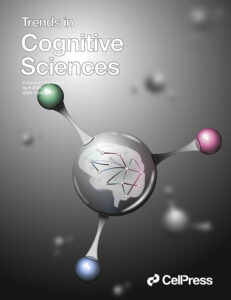
The MCWG is made up of four international and multidisciplinary councils dedicated to promoting molecular connectivity research via dissemination of methods, results, collaboration, and resource sharing (e.g. datasets, tools) within the scientific community. We encourage the neuroscientific community to take an integrative perspective in study of the brain connectome, where various methods including MRI-based techniques, electrophysiological tools, and molecular imaging advance our understanding of the brain. Please find fundamental questions outlined here: “Brain connectomics: time for a molecular imaging perspective?”
Our website can be found here. We also invite you to join the MCWG!