

Thank you to everyone who joined us for January’s MCOS with Dr. Sarah Genon! Missed it? The recording is available here.
Date: February 20th, 2026
Time: 14:00 UTC
Registration: Please register here.
Title: Constructing the human brain metabolic connectome with MR spectroscopic imaging reveals cerebral biochemical organization
Speakers: Dr. Paul Klauser, Dr. Federico Lucchetti
Abstract: Fast three-dimensional proton magnetic resonance spectroscopic imaging (¹H-MRSI) now enables whole-brain mapping of metabolites, offering a biochemical dimension to brain organization that is largely missing from current connectomics. Using high-resolution ¹H-MRSI in 51 healthy participants, we construct a within-subject metabolic connectome defined by correlations among five metabolites (tCr, tNAA, Glx, Ins, Cho) across gray-matter regions. The resulting networks reveal a dominant metabolic similarity mode forming a continuous caudal-to-rostral gradient and which reflects a trade-off between local metabolic homogeneity. Metabolic similarity overlaps partly with structural hubs but aligns more strongly with cytoarchitectonic similarity and gene co-expression than with tractography-based connectivity. These findings establish metabolic similarity as a robust, biologically grounded axis of brain organization and position ¹H-MRSI as a complementary modality for connectomics in health and disease.

Paul Klauser, MD-PhD, is a child psychiatrist, consultant in the Department of Psychiatry at Lausanne University Hospital, tenure-track Assistant Professor at the University of Lausanne and Head of the Research Unit on Psychosis in Lausanne Switzerland. ORCID; LinkedIn.

Federico Lucchetti, PhD, is a trained physicist who earned his PhD in Neuroscience from the Free University of Brussels in 2019. He then spent several years at the University of Luxembourg, where he worked on cyber resilience and distributed systems, before joining in 2023 Paul Klauser’s group, where he now focuses on whole-brain MR spectroscopic imaging (MRSI) and metabolic connectomics.
The MCOS promotes rigor in research and resource sharing. We aim to hold MCOS every third Friday of the month, subject to change due to speaker availability. Please stay tuned for MCOS updates and reminders on social media! Thank you!
Each month, we will feature a member of the MCWG and have a brief Q&A!
This month please enjoy our highlight of Prof Dr Mattia Veronese, member of the MCWG Steering Committee.

Mattia Veronese is Associate Professor in Biomedical Engineering at the Department of Information Engineering, University of Padua and Honorary Senior Lecturer in Neuroimaging at King’s College London. He is a biomedical engineer by training and holds a PhD in PET kinetic modelling. His main research interest is related to the development and validation of molecular neuroimaging biomarkers and to their use for drug development and precision medicine. With over 15 years of experience and 200+ peer-reviewed publications in analysing high-dimensional brain imaging data and large observational cohorts, his work focuses on transforming complex information into robust and clinically meaningful indicators.
Prof Dr. Mattia Veronese has graciously responded to our feature questionnaire:
What sparked your interest in molecular imaging or led you to focus on research in molecular imaging?
My interest in molecular imaging grew out of a broader fascination with how biology gives rise to complex behavior. Early in my training, I became increasingly aware of the gap between molecular-scale processes – such as receptor dynamics, synaptic signaling, and gene expression – and the systems-level phenomena we observe in brain function. Molecular imaging felt like a bridge across that gap. It offers a level of biological specificity about in vivo processes that other neuroimaging modalities cannot provide.
What particularly motivates me is its translational potential. The ability to characterize molecular mechanisms in living patients, to better understand neuropsychiatric and neurological disorders, and to contribute to the development and evaluation of new treatments makes the work feel deeply meaningful. Molecular imaging not only advances our scientific understanding, but also has a direct path toward improving human health – and that sense of impact is what continues to drive me.
In what ways do you imagine molecular connectivity will advance our understanding of brain function?
Molecular connectivity has the potential to fundamentally refine how we interpret brain networks from a biological perspective. Much of current connectivity research focuses on structural pathways or functional correlations. By incorporating molecular information, we can begin to ask why certain networks behave the way they do – linking patterns of connectivity to underlying receptor distributions, neurotransmitter systems, and cellular architecture. In addition, molecular connectivity offers a complementary framework to traditional approaches in molecular imaging. Rather than examining isolated regional measures, it adopts a multivariate perspective by design, capturing coordinated patterns across the brain. This makes it particularly powerful from a statistical standpoint and well suited for integration with other neuroimaging modalities. Ultimately, it provides a promising pathway toward more effective and biologically grounded multimodal integration.
What is your favorite mentoring memory—either a story about a mentor’s impact on you or your impact on a mentee?
Throughout my career, I have been fortunate to work with remarkable scientists who embody honesty, intellectual rigor, and generosity. Beyond the science they shared with me, I am especially grateful for the space they gave me to develop my own ideas and pursue my own interests. Those experiences shaped me profoundly, and I could tell many stories that contributed to who I am today. One memory I particularly cherish is in honour of Professor Vincent Cunningham, who is sadly no longer with us. I first met him early in my PhD, when he was nearing retirement after a distinguished career in PET imaging across both academia and industry. On one of my very first days as a doctoral student, he asked me to give a lecture to his group about a specific method I had been working on. I remember wondering what I – a greeny student from nowhere – could possibly offer to someone who had helped shape the field of PET imaging. When the day came, he arrived with his notebook and pen, fully attentive and engaged. His presence alone made me feel valued, but what stayed with me most was what he said afterward. When I thanked him for attending, he replied that I did not need to thank him – because listening to others is essential to becoming a good scientist. That moment left a lasting impression on me. It taught me that true scientific excellence is inseparable from humility and openness, and it continues to shape how I would like to approach mentorship and collaborations.
📝 Brain glucodynamic variability is an essential feature of the metabolism-cognition relationship
In this study, Deery and colleagues compared the variability of functional FDG PET (fPET) with measures of global and local efficiency of metabolic networks and cognitive performance. They showed the crucial role of time-varying glucose consumption has on cognition and cognitive ageing.
Read the full study in Proceedings of the National Academy of Sciences of the United States of America.
Key Findings:
📝 Metabolic brain connectivity analysis of a depressive-like phenotype in rats: a graph theory PET study
In this study, Vazquez-Matias and colleagues aimed to investigate whether there were metabolic connectivity alterations in the brain of rats with a depressive-like phenotype, using PET and graph theory methods. Male Wistar rats were exposed to 5 days of repeated social defeat (RSD) to induce a depressive-like phenotype, and brain connectivity was assessed with [18F]FDG-PET.
Read the full study in Psychiatry Research.
Key Findings:
📝 Mapping structural disconnection and transcriptomic signatures in Alzheimer’s disease with MIND networks
In this study, Wu and colleagues applied morphometric inverse divergence (MIND), an innovative approach for fine-grained mapping of structural disconnection and its transcriptomic correlates in AD.
Read the full study in Brain Research Bulletin.
📝 Metabolic Connectivity Gradients of the Human Brain
In this study, Deery and colleagues used functional positron emission tomography (fPET) with [18F]Fluorodeoxyglucose (FDG) to characterise the brain’s metabolic connectivity gradients and determine how neurobiological mechanisms shape these gradients to support cognition across the adult lifespan.
Read the full study in bioRxiv.
The MCWG Outreach Council invites you to submit announcements or information about papers, conferences, presentations or other events or news related to brain and molecular connectivity as well as any positions available or job opportunities that you wish to publicize and share with the community!
Please submit any material for consideration by the final day of each month using this form – thank you!
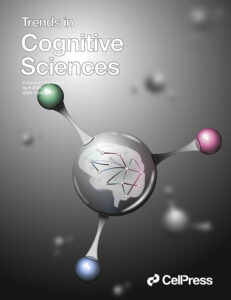
The MCWG is made up of four international and multidisciplinary councils dedicated to promoting molecular connectivity research via dissemination of methods, results, collaboration, and resource sharing (e.g. datasets, tools) within the scientific community. We encourage the neuroscientific community to take an integrative perspective in study of the brain connectome, where various methods including MRI-based techniques, electrophysiological tools, and molecular imaging advance our understanding of the brain. Please find fundamental questions outlined here: “Brain connectomics: time for a molecular imaging perspective?”
Our website can be found here. We also invite you to join the MCWG!