

Thank you to everyone who joined us for February’s MCOS with Dr. Paul Klauser and Dr. Federico Lucchetti! Missed it? The recording is available here.
Date: March 20th, 2026
Time: 14:00 UTC
Registration: Please register here.
Title: Human Cerebral Cortex Organization Characterized by Functional PET-FDG “Metabolic Connectivity”
Speaker: Penghui Du
Abstract: Resting-state metabolic connectivity (RSMC) as measured by [18F]-fluorodeoxyglucose functional PET (fPET-FDG) provides a promising framework for understanding the brain’s energetic organization, yet its spatiotemporal structure remains insufficiently characterized. Here, we investigated the cortical organizational principles of RSMC in the human brain and their relationship to other known cortical organizational features. At the local scale, metabolic boundaries partly overlapped with resting-state functional connectivity patterns. At the global scale, RSMC was organized along a robust superior-inferior cortical gradient, and was primarily driven by low-frequency, minute-scale fPET-FDG dynamics. This large-scale metabolic profile aligned with known anatomical and energetic constraints, providing new insights into the brain’s energetic architecture. Link to BioRxiv
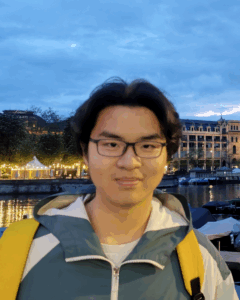
Penghui Du is currently a Master’s student in Neuro-X at EPFL. He received his BSc in Intelligent Medical Engineering from the Southern University of Science and Technology in 2024. As a visiting student at the CANDY Lab (Athinoula A. Martinos Center for Biomedical Imaging, Massachusetts General Brigham, United States), he worked with Dr. Jingyuan Chen on mapping the organization of the human cerebral cortex using functional PET-FDG metabolic connectivity. Personal website: https://penghui-du.com/
The MCOS promotes rigor in research and resource sharing. We aim to hold MCOS every third Friday of the month, subject to change due to speaker availability. Please stay tuned for MCOS updates and reminders on social media! Thank you!
Each month, we will feature a member of the MCWG and have a brief Q&A!
This month please enjoy our highlight of Prof Dr Vesna Sossi, member of the MCWG Steering Committee.

Prof Dr Vesna Sossi received a Laurea degree in high energy Physics from the University of Trieste Italy and a PhD in Nuclear Physics from the University of British Columbia in 1991. After completing her graduate degree, she went on to a post-doctoral fellowship in the UBC/TRIUMF PET group working on Medical Imaging. She is currently a Professor in the Physics and Astronomy Department and Adjunct Professor in Medicine at UBC and has been leading the UBC Positron Emission Tomography (PET), now PET/MRI brain imaging program since 2009.
Professor Sossi’s expertise and research interests lie in using clinical and preclinical imaging to investigate neurodegeneration and other brain diseases through development of instrumentation, data quantification, image analysis, kinetic modelling, image reconstruction and novel imaging protocols. She is particularly interested to further develop and exploit hybrid PET/MR imaging to gain access to as yet poorly investigated aspects of brain function such as brain energetics and neurovascular coupling in the healthy brain and as affected by neurodegeneration and exercise, as well as other possible neuroprotective mechanisms. Some examples of her research are: the development of a complex dopamine turnover measurement using PET in humans and rodents and the demonstration of its relevance to Parkinson’s disease (PD), first applications of texture and pattern analyses to PET imaging of several neurotransmitter systems, particularly well-suited to identify interactions between systems, and lately exploring brain energetics and its modulation by exercise in PD. She has been elevated to IEEE Fellow status for ‘for contributions to quantitative and translational brain PET imaging’.
She has over 250 peer reviewed journal publications, and has trained many graduate and undergraduate students. Professor Sossi sits on several national and international review committees and received several CFI, NSERC and Michael Smith Foundation for Health Research awards during her career. She is also currently Director Elect for IEEE Division IV.
Prof Dr Vesna Sossi has graciously responded to our feature questionnaire:
What sparked your interest in molecular imaging or led you to focus on research in molecular imaging?
I have originally chosen physics as my field of studies, as I was fascinated by the world around me. However I have been equally interested in medicine and particularly in how the brain works. Molecular imaging provided a natural bridge between the two through radiation detectors. The more I learned about the power of molecular imaging, the more I was intrigued by the unique information it could provide on brain function.
In what ways do you imagine molecular connectivity will advance our understanding of brain Function?
Molecular connectivity promotes thinking of the brain as a very complex circuit with feedback loops and interconnected effects, which, I believe, better represents the intricate functioning of the brain than looking at it as a composite of individual entities. Indeed, many disease and intervention related effects can be more readily observed on a pattern level rather than investigating behaviours of individual brain regions separately. Connectivity type analysis also lends itself well to inclusion of multi-modal data, possibly revealing related effects in different brain function and neurochemical domains.
What do you think are the most important challenges in current brain connectivity research, or which unsolved/underappreciated issues should the community address?
Lack of uniform imaging protocols including choice of radiotracers, data acquisition and processing, and possibly subject selection criteria. Equally important is validation of the methodology, analysis and statistical approaches, pipelines and cutoff criteria, when relevant. Another challenge is how to best relate the effects observed at a spatial and temporal scale commensurate with imaging to the underlying effects occurring at the cellular level which operate at different scales and generally involve a much larger degree of complexity.
What is your favorite mentoring memory—either a story about a mentor’s impact on you or your impact on a mentee?
There are many stories, but one of my favourite ones dates to the very early years of my molecular imaging career, when I was writing my first paper in this area. I wrote ‘… I placed a region of interest on the striatum….’. Dr. Brian Pate, who was at that time leading the UBC Primate imaging program, looked at me and said: ‘No, this is not what you have done’. He must have registered the confused look on my face and said with a chuckle: ‘ You placed a region of interest on the IMAGE of the striatum!’. It may appear insignificant, but that comment prompted me to examine extremely carefully what is being done at each step of any analysis approach for the rest of my career – and not just when it came to descriptions!
Multimodal Integration in Human Brain Mapping
Bordeaux June 14, 2026 – (In-person at Palais 2 l’Atlantique – duration: 4h)
Organizers: Prof Dr Joana B Pereira and Dr Arianna Sala
Capturing Rich Multimodal Brain Interactions: Model Selection, Interpretability, and Clinical Applications (20 min)
Prof. Jing Sui – IDG/McGovern Institute for brain research, State Key Laboratory of Cognitive Neuroscience and Learning, Beijing Normal University, China
Neuromaps: A Python Toolbox for Cross-Modal Standardization and Interpretation (20 min)
Dr. Vincent Bazinet – Montréal Neurological Institute, McGill University, Montréal, Quebec, Canada
Linking MRI-Derived Measures and Underlying Neurophysiology Using the JuSpace Toolbox (20 min)
Prof. Juergen Dukart – Institute of Neurosciences and Medicine, Brain & Behaviour (INM-7), Research Centre Juelich; Juelich, Germany
Multilayer Network Modelling with the BRAPH 2 software (20 min)
Assoc. Prof. Joana B. Pereira – Clinical Neurosciences Department, Kalinska Institute, Stockholm, Sweden
Integrating fMRI and PET data through REACT (20 min)
Dr. Manuela Moretto – Department of Information Engineering, University of Padua, Padua, Italy
JuSpace: Spatial Correlation Analyses for Molecular–MRI Integration (35 min)
Prof. Juergen Dukart – Institute of Neurosciences and Medicine, Brain & Behaviour (INM-7), Research Centre Juelich; Juelich, Germany
Practical Tutorial with Neuromaps (35 min)
Dr. Vincent Bazinet – Montréal Neurological Institute, McGill University, Montréal, Quebec, Canada
Multilayer Network Analyses with BRAPH 2 (35 min)
MS Yu-Wei Chang – Department of Physics, University of Gothenburg, Gothenburg, Sweden
Receptor-Enriched Functional Connectivity with REACT (35 min)
Dr. Manuela Moretto – Department of Information Engineering, University of Padua, Padua, Italy
👨🏼🔬 We are looking for Volunteers – Join us!
The resources committee is currently looking for volunteers for the literature review of studies in molecular connectivity.
If you are interested in joining us, please reach out through: https://molecularconnectivity.com/how-to-join/
📝A Data-Driven SSM/PCA Analysis Approach for Differential Diagnosis of Parkinsonism Using 11C-PE2I PET
This study by Falk and colleagues was a proof-of concept study to derive specific disease patterns from parametric images derived from dynamic 11C-PE2I (dopamine transporter imaging) images for differential diagnosis of individuals with Parkinson’s disease, dementia with Lewy bodies, and progressive supranuclear palsy.
Read the full study in NeuroImage Clinical.
Key Findings:
📝Altered brain glucose metabolism and connectivity in young adults with obstructive sleep apnea
In this study by Caminiti and colleagues the effects of moderate to severe obstructive sleep apnea syndrome on the brain were analysed using FDG PET comparing patients to cognitively unimpaired or without other systemic or neurological disorders individuals. A voxel-wise seed-based interregional correlation analysis was performed to assess large-scale networks affected by the disease.
Read the full study in Alzheimer’s and Dementia.
Key Findings:
📝Early diagnosis of Alzheimer’s disease: graph theoretical analysis of cerebellar network features based on [18F]AV45 PET
Li and colleagues had the primary objective to investigate changes in cerebellar amyloid plaques along the Alzheimer’s disease spectrum. Using amyloid PET and graph theory, they concluded that abnormal amyloid plaque deposition affects connectivity networks in the early stages of Alzheimer’s disease.
Read the full study in PLoS One.
📝Human Cerebral Cortex Organization Characterized by Functional PET-FDG “Metabolic Connectivity”
In this study, Du and colleagues characterized the spatiotemporal organization of resting-state metabolic connectivity (RSMC) in the human brain, as measured by [18F]fluorodeoxyglucose (FDG) functional PET (fPET-FDG). They examined the relationship between RSMC organization and resting-state functional connectivity (RSFC) derived from functional magnetic resonance imaging and other known cortical organizational principles.
Read the full study in bioRxiv.
📝Network-Based Analysis for the Quantification of Brain and Body Immune Axes with Total-Body PET Imaging
In this study, Maccioni and colleagues aimed to validate network analysis of total-body 18-kDa translocator protein (TSPO) PET imaging for studying brain and body immune axes.
Read the full study in Journal of Nuclear Medicine.
Key Findings:
📝Enhancing diagnosis of mild cognitive impairment through brain-heart-gut metabolic networks in whole-body PET imaging
In this study, Li and colleagues presented a framework integrating brain-heart-gut interactions using whole-body positron emission tomography (PET) to enhance brain-only diagnostic performance in mild cognitive impairment (MCI).
Read the full study in Cell Reports Medicine.
Key Findings:
The MCWG Outreach Council invites you to submit announcements or information about papers, conferences, presentations or other events or news related to brain and molecular connectivity as well as any positions available or job opportunities that you wish to publicize and share with the community!
Please submit any material for consideration by the final day of each month using this form – thank you!
The MCWG is made up of four international and multidisciplinary councils dedicated to promoting molecular connectivity research via dissemination of methods, results, collaboration, and resource sharing (e.g. datasets, tools) within the scientific community. We encourage the neuroscientific community to take an integrative perspective in study of the brain connectome, where various methods including MRI-based techniques, electrophysiological tools, and molecular imaging advance our understanding of the brain. Please find fundamental questions outlined here: “Brain connectomics: time for a molecular imaging perspective?”
Our website can be found here. We also invite you to join the MCWG!